Studio Libeskind and Haptic Architects

With Martha Schwartz Partners, BuroHappold, Lord Cultural Resources, Alan Baxter, Garbers & James and James E. Young
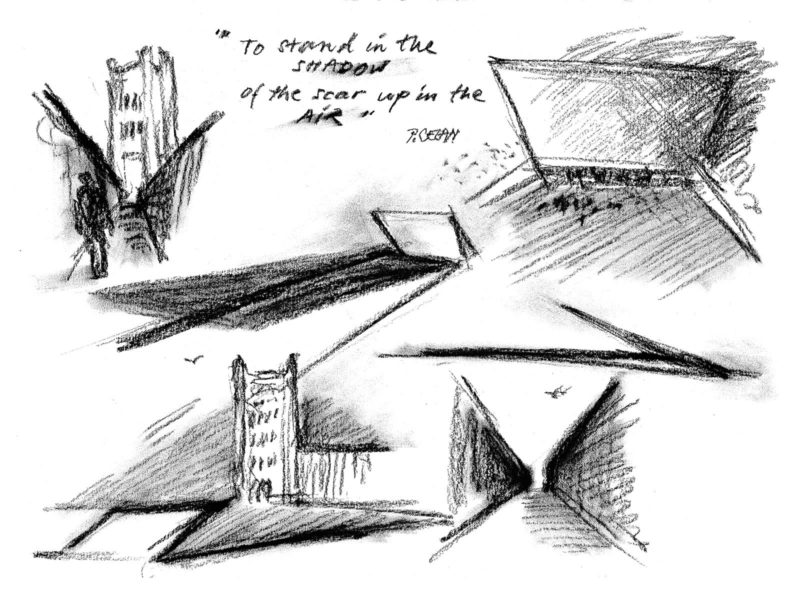
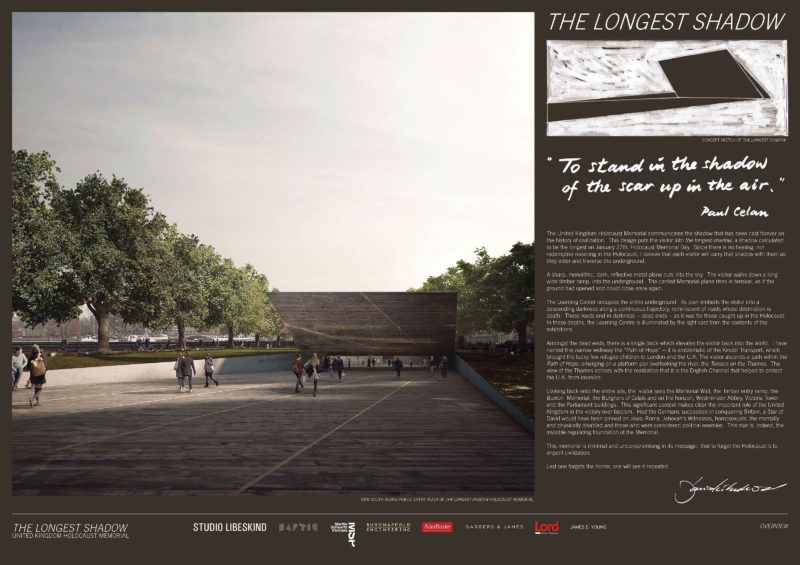
Studio Libeskind and Haptic Architects concept sketch: hand-drawn studies of Victoria Tower and angular memorial forms, annotated with a quote from Paul Celan, 'To stand in the shadow of the scar up in the air'
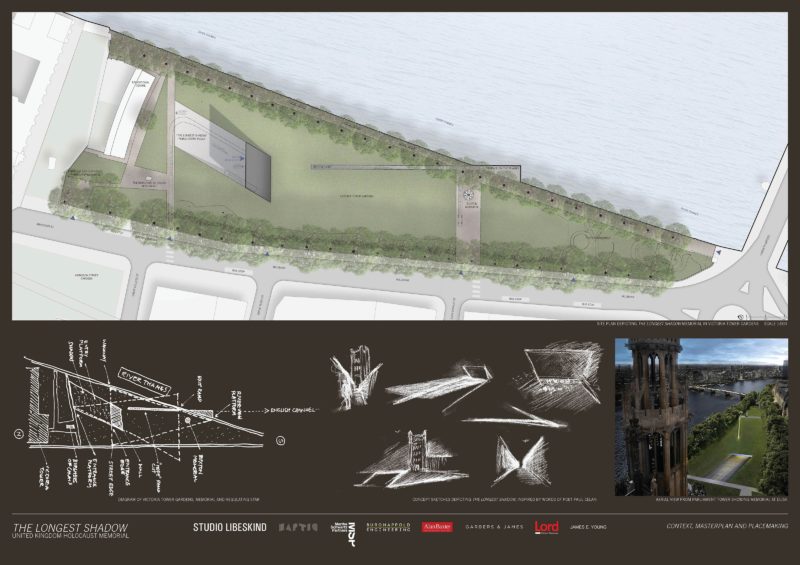
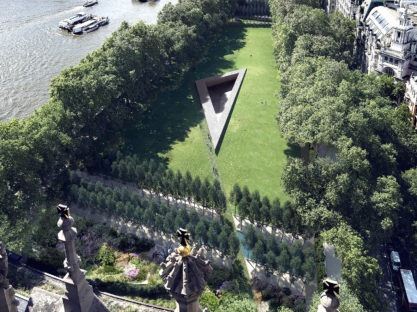
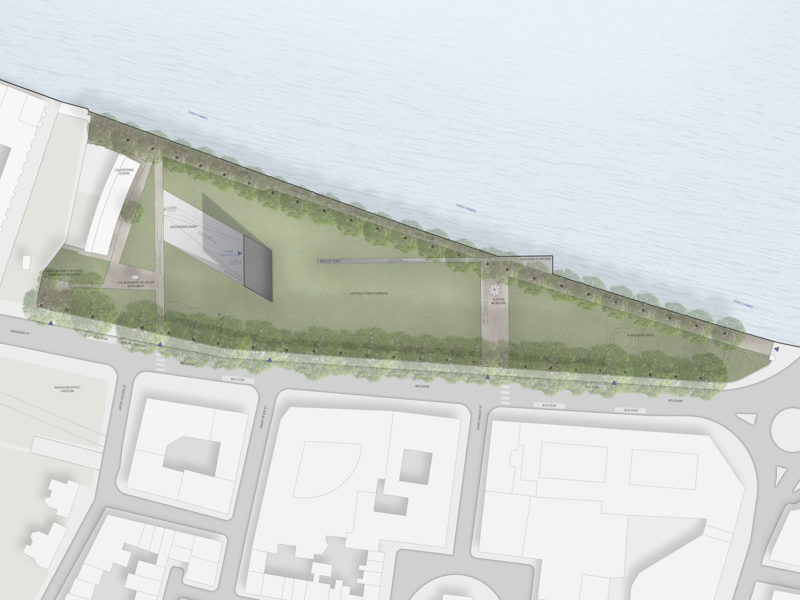
Studio Libeskind and Haptic Architects concept render: aerial site plan of Victoria Tower Gardens showing the memorial's descending ramp and layout among the existing monuments
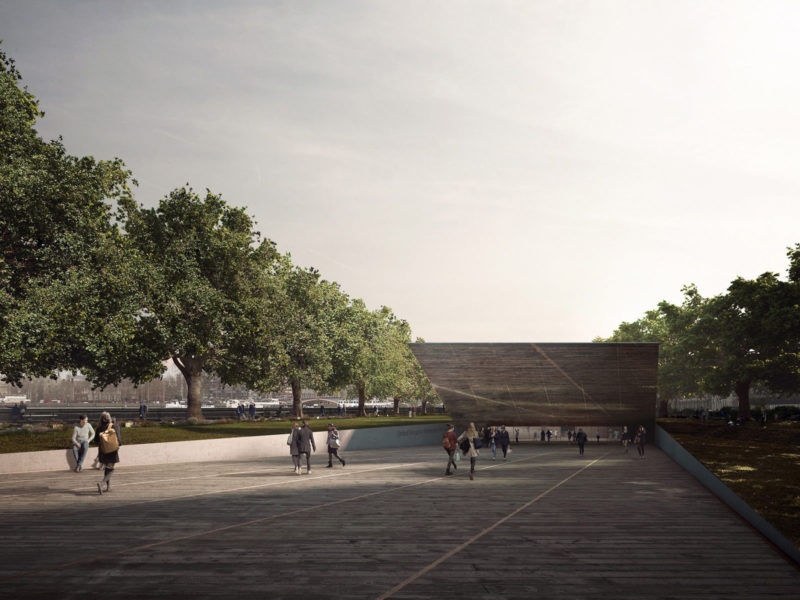
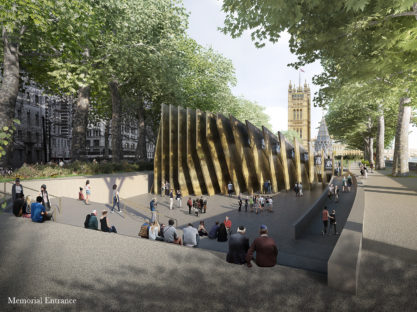
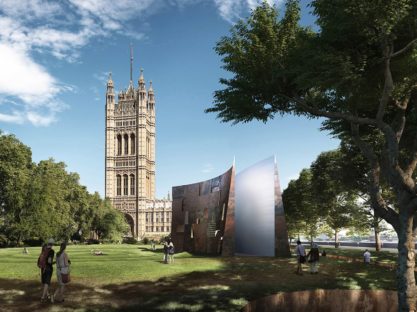
Studio Libeskind and Haptic Architects concept render: daytime exterior view of the angular corten-steel-clad memorial rising from the lawn
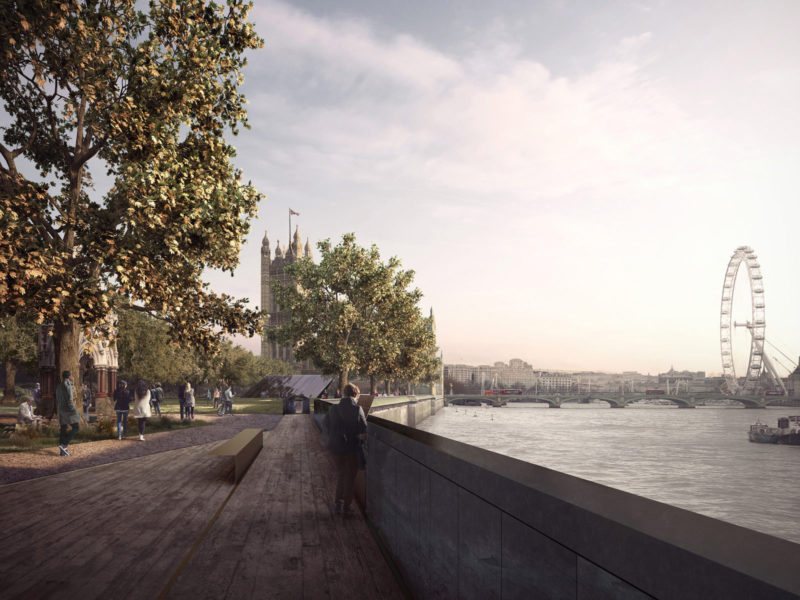
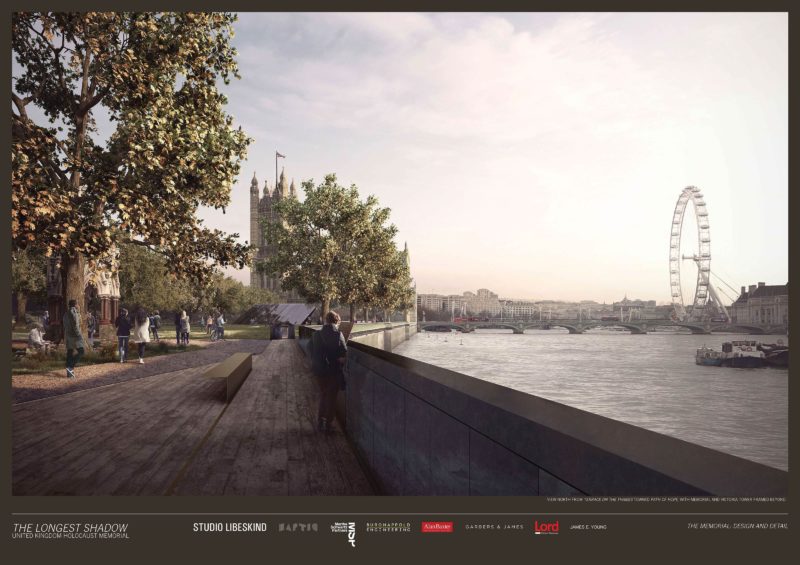
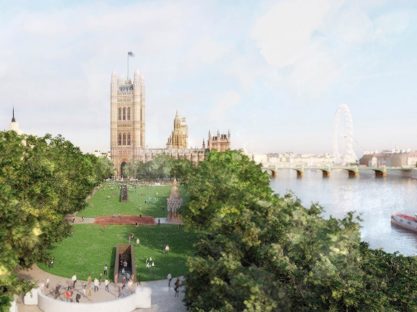
Studio Libeskind and Haptic Architects concept render: view along the riverside path with Victoria Tower and the London Eye, and the low angular memorial visible in the gardens
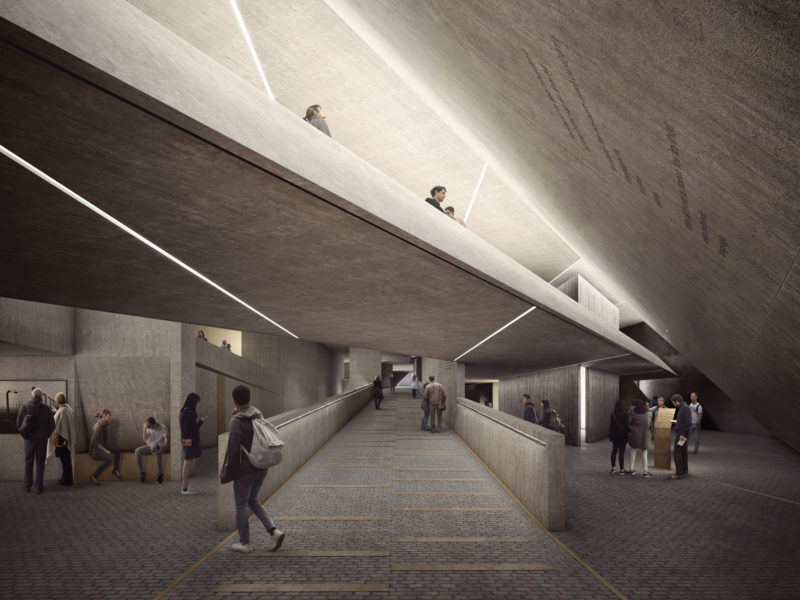
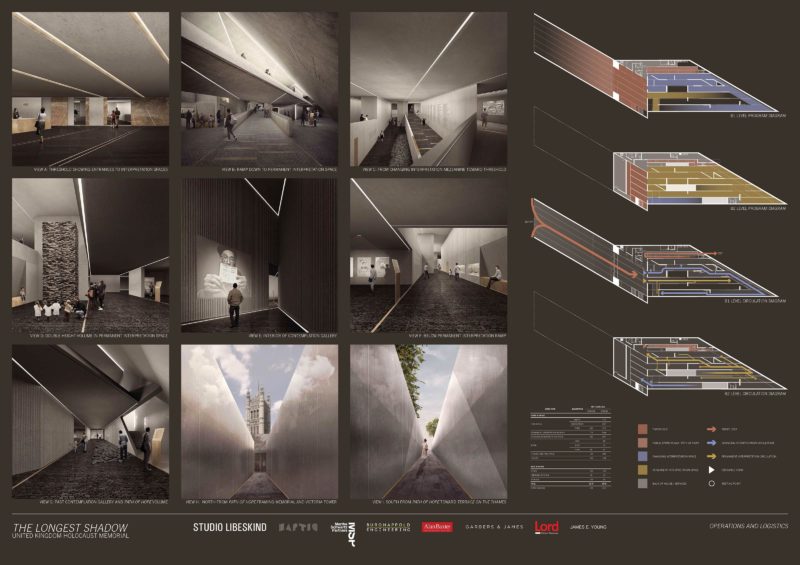
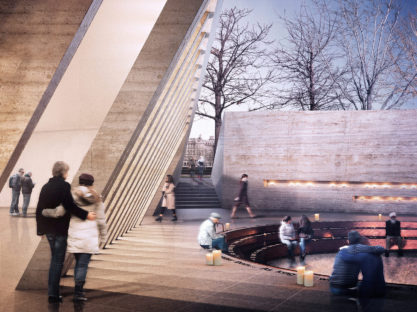
Studio Libeskind and Haptic Architects concept render: an underground exhibition corridor beneath an inscribed sloped ceiling, with visitors on a mezzanine bridge above
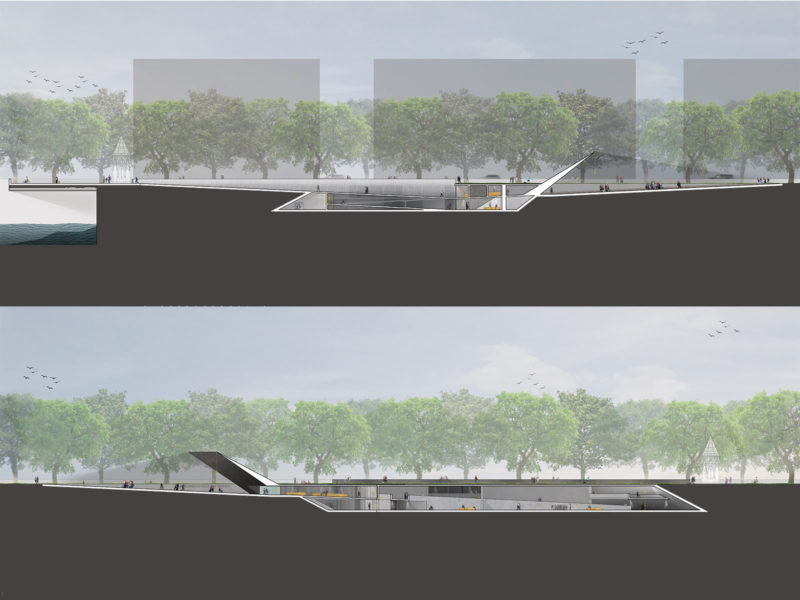
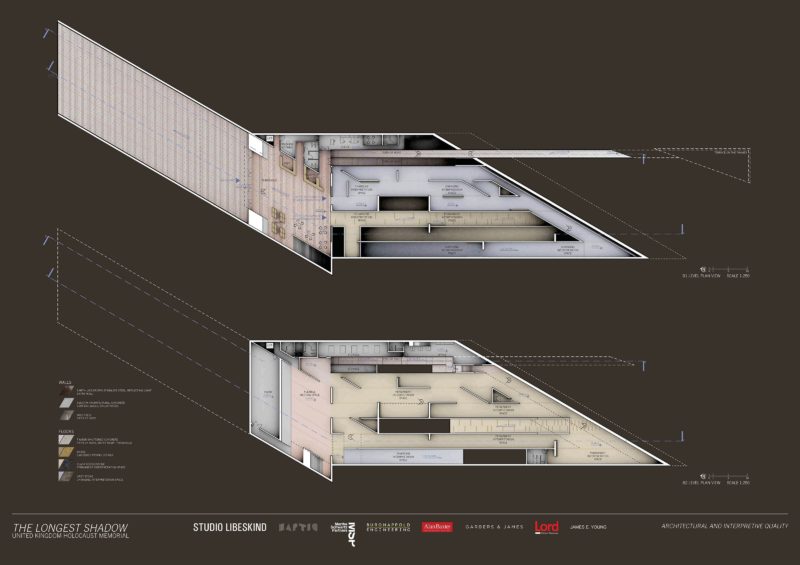
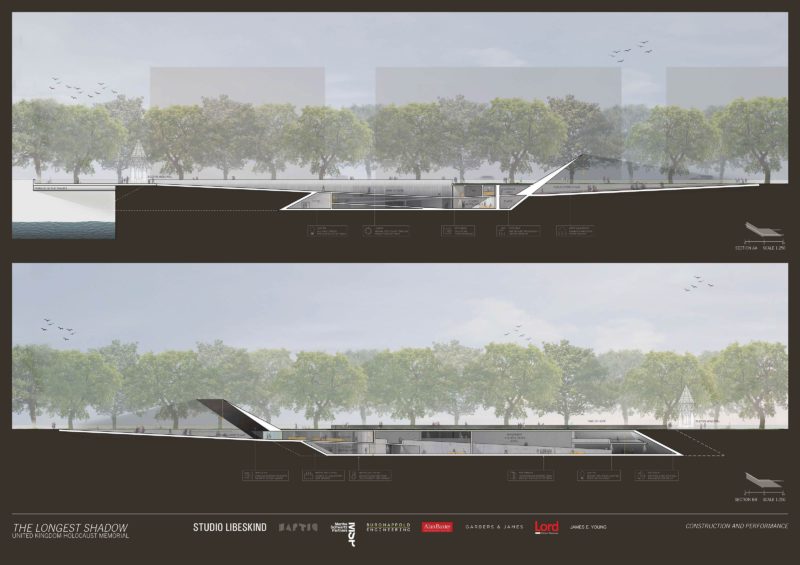
Studio Libeskind and Haptic Architects concept drawing: long cross-sections through the below-ground museum and memorial complex, showing the sloped roof and underground galleries
Studio Libeskind and Haptic Architects presentation board 1
Studio Libeskind and Haptic Architects presentation board 2
Studio Libeskind and Haptic Architects presentation board 3
Studio Libeskind and Haptic Architects presentation board 4
Studio Libeskind and Haptic Architects presentation board 5
Studio Libeskind and Haptic Architects presentation board 6

The Memorial communicates a shadow that has been cast forever on the history of civilization. Since there is no redemptive meaning in the Holocaust, visitors carry this shadow with them as they journey underground.

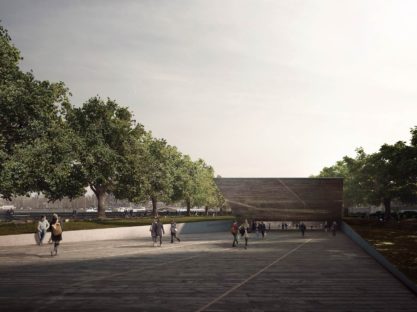
A dark, reflective metal plane cuts into the sky. The visitor walks down a wide timber ramp, passing through this plane into the underground.

Once inside, the visitor descends into darkness along a continuous trajectory, the path illuminated by light cast from the contents of the exhibitions.

Within this darkness, there is a single track – the Path of Hope – which elevates the visitor back into the world, culminating in a platform pier overlooking the Thames.

Turning back, the visitor sees the Memorial framed by the context beyond.

This memorial is minimal and uncompromising in its message: that to forget the Holocaust is to imperil civilization.

Lest one forgets the horror, one will see it repeated.